Indoor navigation

Lead designer / App / Macy’s

An indoor navigation experience for department stores using AR to guide customers to products and key locations.

The product challenge

Indoor navigation introduces challenges that outdoor GPS doesn’t face.

Signals are unreliable inside buildings, customers must understand both their location and orientation, and routes must guide them through departments and aisles.

The challenge was translating complex spatial information into guidance customers could follow while walking through a busy store.

System approach

The proof-of-concept combined several technologies to enable indoor navigation.

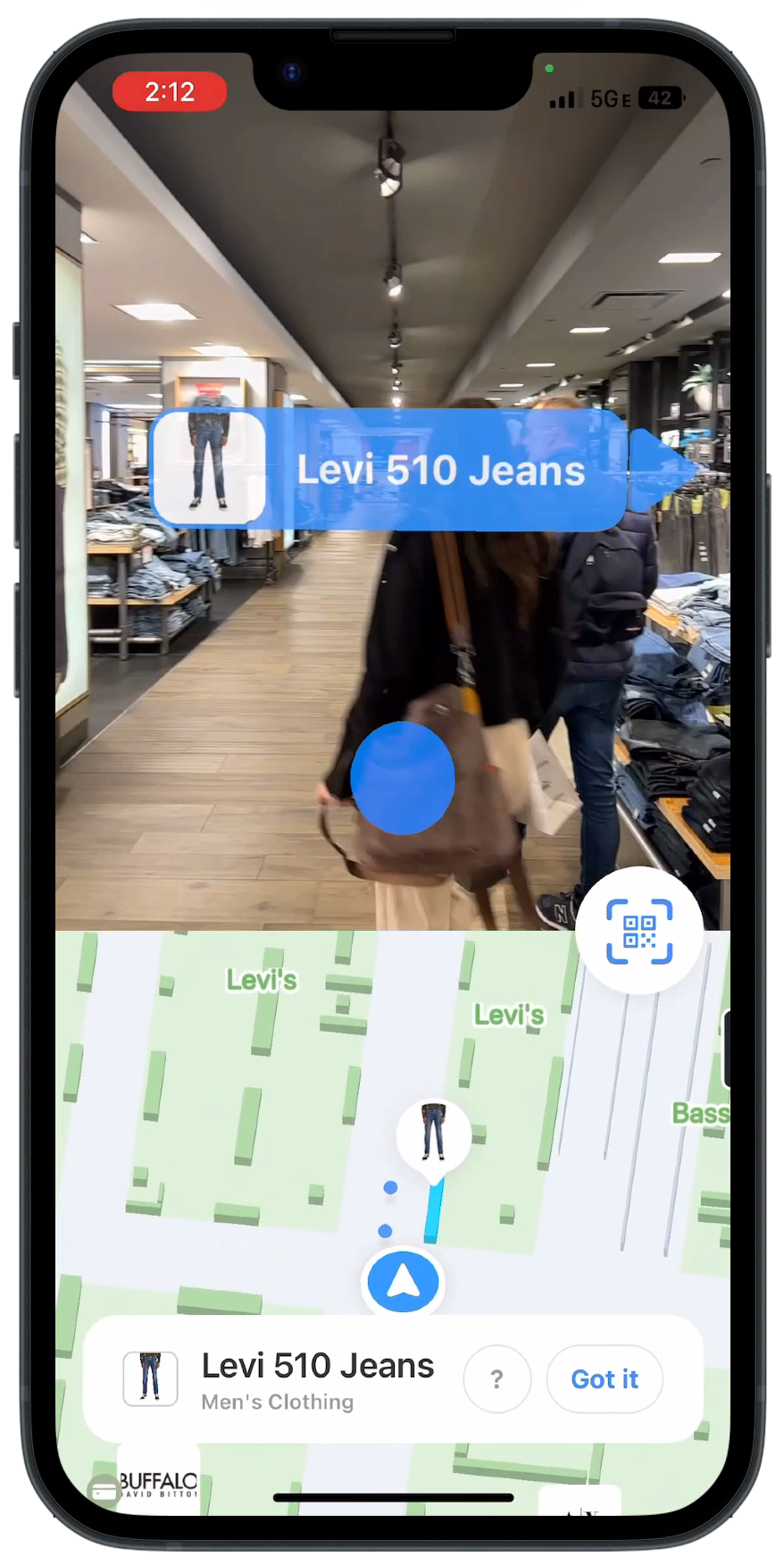
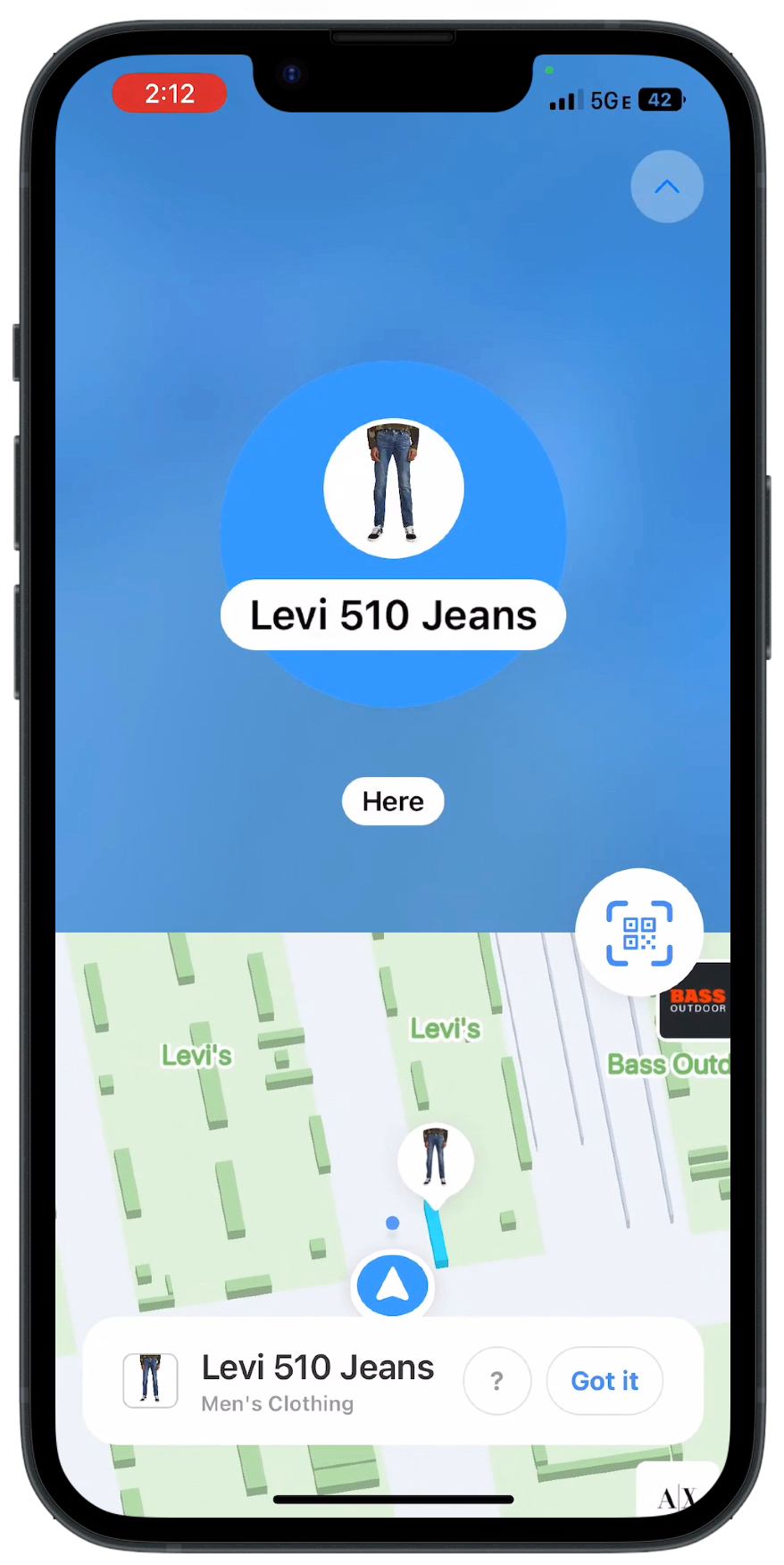
Bluetooth beacons determine a customer’s location, a “blue dot” shows their position and orientation, and augmented reality provides visual guidance along the route.

“The interaction mirrors familiar navigation apps to reduce cognitive load”

Designing the experience

The interaction model mirrors familiar navigation apps to reduce cognitive load.

Customers search for a product or location, orient themselves using a map showing their real-time position and direction, then follow step-by-step directions through the store as the route updates dynamically.

Prototyping & testing

Indoor navigation depends heavily on spatial awareness, making prototyping and testing essential.

Through concept exploration, interaction design, and live store testing, we refined how directions and orientation cues were presented while customers moved through the space.

Outcome

The final prototype enabled customers to navigate to products and store destinations with high accuracy.

The system could guide users to within roughly five feet of a product, providing clear directions through departments, aisles, and store floors.

The work demonstrated how indoor navigation could make large department stores easier—and less frustrating—to explore.

“Easier—and less frustrating—to explore”
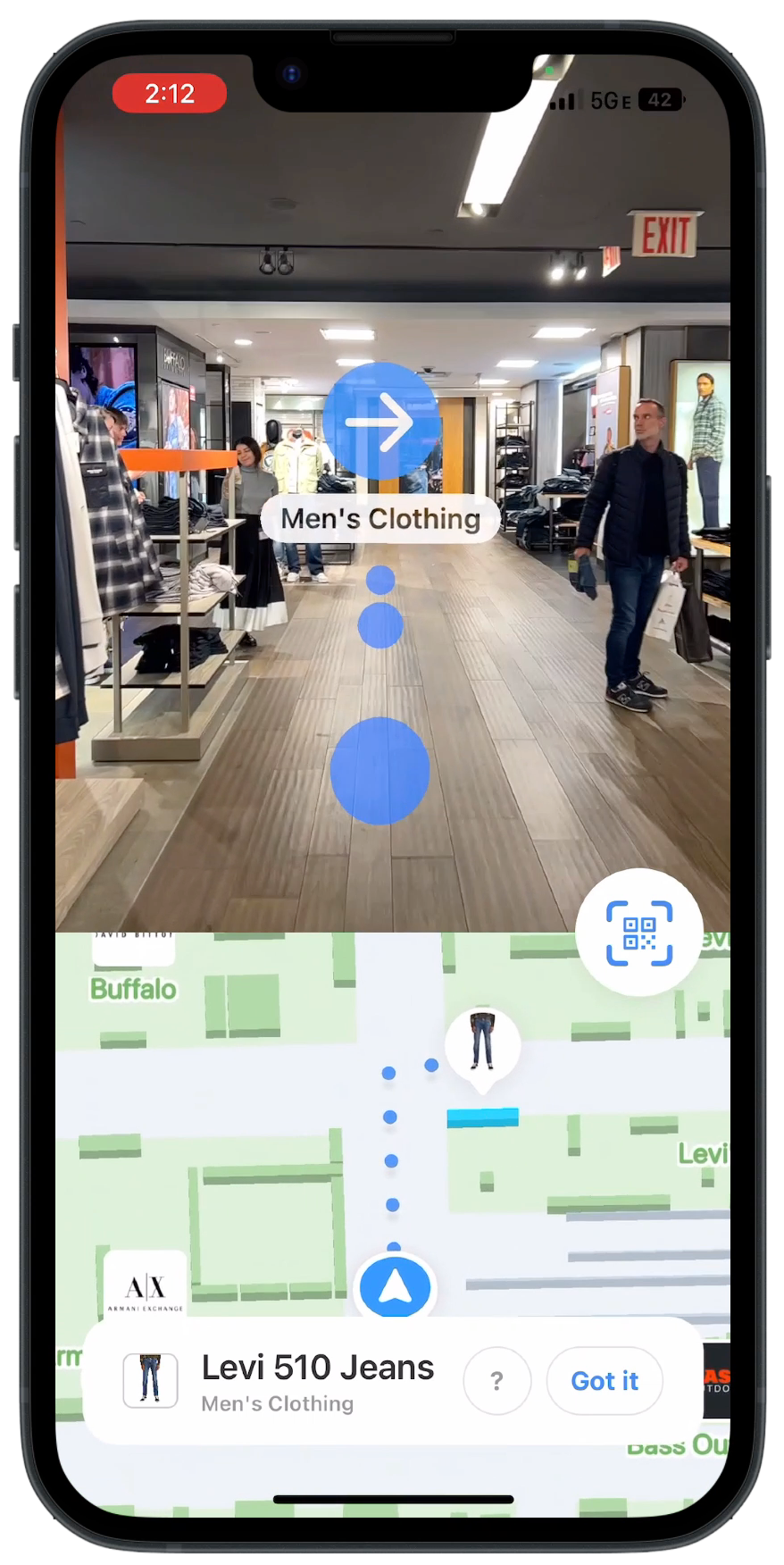
Demo screenshot
Demo screenshot
Demo screenshot
Demo screenshot

Indoor navigation

Lead designer / App / Macy’s

Designing an indoor navigation experience for department stores using Bluetooth beacons and AR to guide customers to products and key store locations.

The product challenge

Indoor navigation introduces challenges that outdoor GPS doesn’t face.

Signals are unreliable inside buildings, customers must understand both their location and orientation, and routes must guide them through departments and aisles.

The challenge was translating complex spatial information into guidance customers could follow while walking through a busy store.

System approach

The proof-of-concept combined several technologies to enable indoor navigation.

Bluetooth beacons determine a customer’s location, a “blue dot” shows their position and orientation, and augmented reality provides visual guidance along the route.

“The interaction mirrors familiar navigation apps to reduce cognitive load”

Designing the experience

The interaction model mirrors familiar navigation apps to reduce cognitive load.

Customers search for a product or location, orient themselves using a map showing their real-time position and direction, then follow step-by-step directions through the store as the route updates dynamically.

Prototyping & testing

Indoor navigation depends heavily on spatial awareness, making prototyping and testing essential.

Through concept exploration, interaction design, and live store testing, we refined how directions and orientation cues were presented while customers moved through the space.

Outcome

The final prototype enabled customers to navigate to products and store destinations with high accuracy.

The system could guide users to within roughly five feet of a product, providing clear directions through departments, aisles, and store floors.

The work demonstrated how indoor navigation could make large department stores easier—and less frustrating—to explore.

“Easier—and less frustrating—to explore”
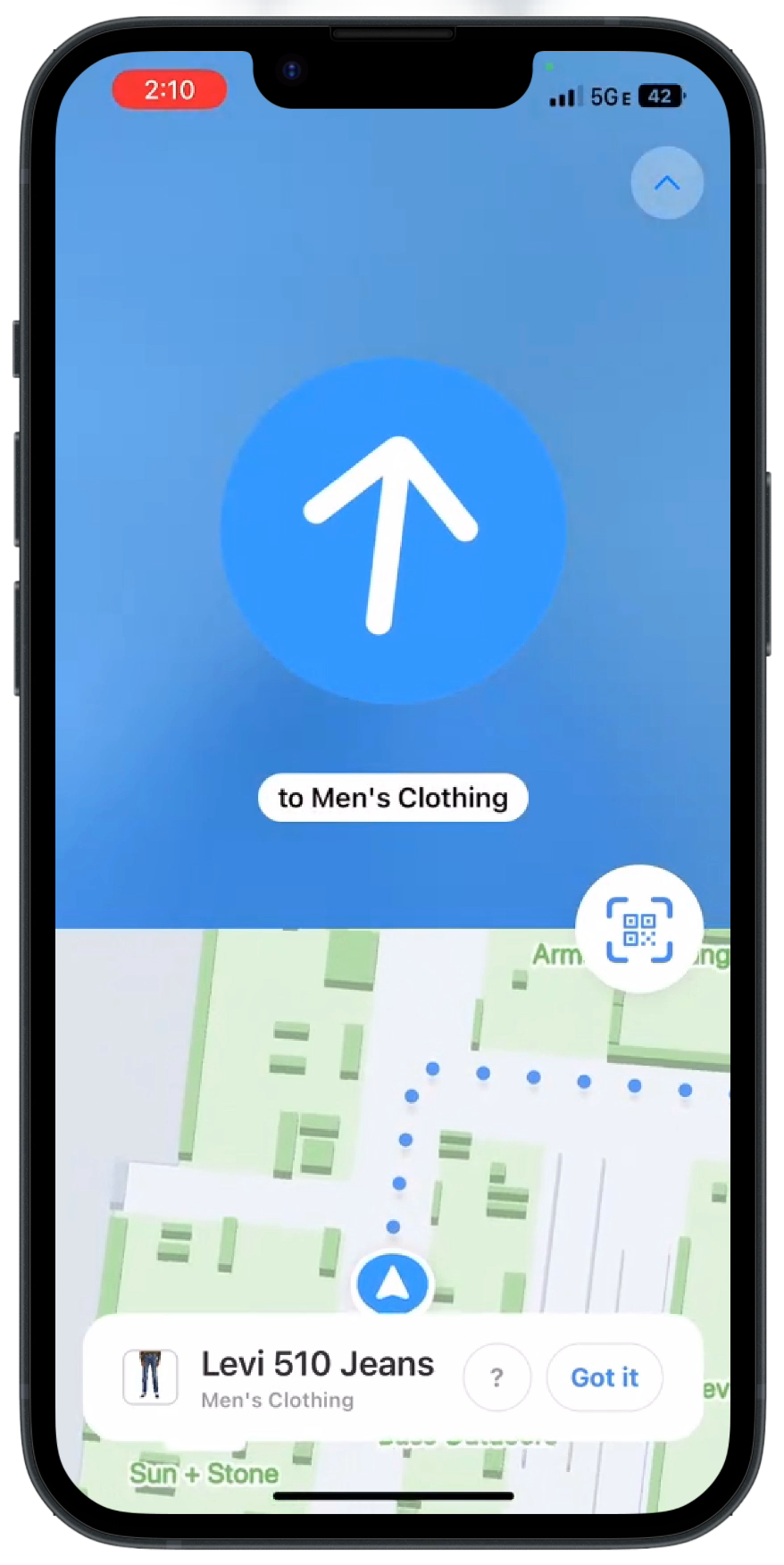
Demo screenshot
Demo screenshot
Demo screenshot
Demo screenshot